
Introduction
Most crystal does not become dull because people neglect it. It becomes dull because people clean it like ordinary glass. Heat, minerals, friction, and residue each take a tiny toll. None of those small mistakes look dramatic in the moment, which is why they repeat so easily. The cloudiness shows up later, after months or years of well-intended care. If you want crystal figurines to keep their liveliness, you need a process built around preservation instead of speed. [1]
The first rule is to reduce abrasion. Paper towels, kitchen sponges, and rough cotton rags all seem harmless because they feel soft in the hand. On polished crystal, especially on sharply cut surfaces, they can still create micro-scratches over time. Those scratches diffuse light instead of reflecting it cleanly, which is why a figurine may start to look dusty even when it is freshly cleaned. A soft microfiber cloth is the safer default, and for tight crevices, a clean cosmetic brush with natural or very fine synthetic bristles works far better than forcing a cloth into small spaces. [2]
Article
What Actually Causes Dullness
The second rule is to control water quality. Tap water varies enormously. In some homes it is perfectly serviceable. In others it dries with visible mineral traces that mimic haze. Distilled water removes that uncertainty. If a figurine has sentimental value or especially fine polish, distilled water is worth using routinely rather than only for special occasions. It simplifies the entire process by eliminating guesswork about whether a mark is residue, damage, or just drying film. [3]
For standard cleaning, prepare a small bowl of room-temperature distilled water with one drop of fragrance-free dish soap. Do not use hot water, because abrupt temperature changes can stress joins, decorative attachments, or delicate edges. Dip the microfiber cloth, wring it thoroughly, and wipe the figurine gently from top to bottom. Work methodically. Crevices, feathers, stems, and faceted bases should be brushed lightly rather than scrubbed. The goal is to lift oils and dust, not to polish through force. [4]
Rinsing matters just as much as washing. Soap residue is one of the quietest ways to reduce brilliance because it can leave an invisible film that only becomes obvious under angled light. A second cloth dampened with plain distilled water is usually enough to remove what remains. If the figurine is simple and has no glued elements, you can also rinse it lightly over a bowl of distilled water rather than under the tap. Then dry immediately using a separate lint-free cloth. Air drying is not ideal, especially in hard-water areas, because it gives minerals time to settle. [5]
A Safer Cleaning Routine
Fingerprints often require a more targeted response. Skin oils cling to polished crystal, and if they are left in place they attract dust. A practical solution is a cloth lightly dampened with a diluted vinegar mixture, about one part white vinegar to three parts distilled water. Wipe the affected area gently, then follow with a plain-water wipe and full dry. This should be used sparingly, not as an everyday cleaner. More aggressive formulas are unnecessary and can complicate care without improving results.
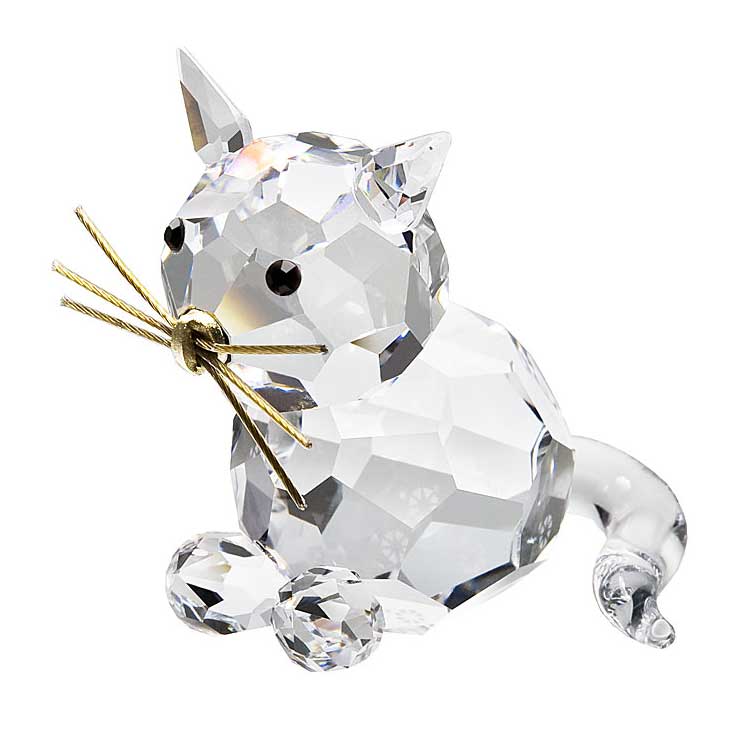
There are also important situations where less is more. Figurines with metal accents, glued bases, painted details, or mixed materials should never be soaked. Immersion increases risk around every join. Even if the crystal itself tolerates the water, adhesives and decorative finishes may not. For those pieces, surface cleaning is the only safe approach. The same caution applies to antique or older figurines where the construction history is uncertain. If you do not know how the piece was assembled, assume it should not be submerged.
Dust management reduces the need for heavy cleaning later. A weekly pass with a clean makeup brush, soft photographic brush, or dry microfiber cloth prevents buildup from becoming sticky. This is especially useful for open shelving, near kitchens, or in rooms with frequent candle use. Dust mixed with airborne oils becomes much harder to remove than ordinary dry surface dust. Regular light maintenance is easier on the crystal and quicker for you.
Maintenance Habits That Preserve Clarity
Storage and placement also affect how often cleaning is needed. Avoid direct cooking vapors, smoking areas, or shelves above radiators where residues accumulate faster and temperature swings are harsher. If a figurine is not on display, wrap it in acid-free tissue or a soft cloth and store it where it will not rub against harder surfaces. Good care is not only about cleaning products. It is about reducing the conditions that make aggressive cleaning necessary.
A useful routine for most households is simple: dust weekly, wipe lightly once a month, and do a fuller clean before seasonal styling changes or gift photography. That cadence keeps crystal bright without encouraging overhandling. The best-maintained figurines are often not the ones that were polished hardest. They are the ones that were handled deliberately, cleaned gently, and protected from buildup before it became a problem.
If your figurine already looks less lively than it once did, do not assume permanent damage immediately. Begin by removing residue carefully, then reassess under natural light. Many pieces recover dramatically once film, mineral traces, and oil buildup are removed. But if a piece stays gray or hazy after a careful cleaning, the issue may be accumulated scratching or internal wear rather than dirt. That is exactly why a gentle process matters from the beginning. Good crystal can remain beautiful for decades when the care method protects its surface instead of slowly eroding it.
More Insights
The goal is not to make crystal look aggressively polished. The goal is to let the original finish keep doing its work. Once you think of cleaning as protection rather than correction, every decision becomes simpler: softer cloth, cleaner water, less friction, better storage, fewer surprises. That mindset preserves not only brilliance but confidence, because you know each cleaning session is helping the piece last longer instead of taking a small toll.
If you are caring for a gift or inherited piece, this matters even more. Preservation is an act of stewardship. The object is not only decorative; it is also carrying sentiment forward. Gentle methods help ensure the piece can be displayed, gifted again, or remembered clearly years from now without the surface wear that harsher habits create.
Sources and Keyphrases
Reading Notes
- Primary topic: how to clean crystal figurines
- Secondary topic: distilled water crystal cleaning
- In-text citations [1]-[5] are embedded for source-backed context.
Keyphrases
- how to clean crystal figurines
- distilled water crystal cleaning
- safe crystal care routine
- prevent crystal haze
- cleaning crystal without scratches
- microfiber cloth crystal care
- crystal figurine maintenance